
The Nature of Action: Are You Living by Instinct, Habit, or Morality?
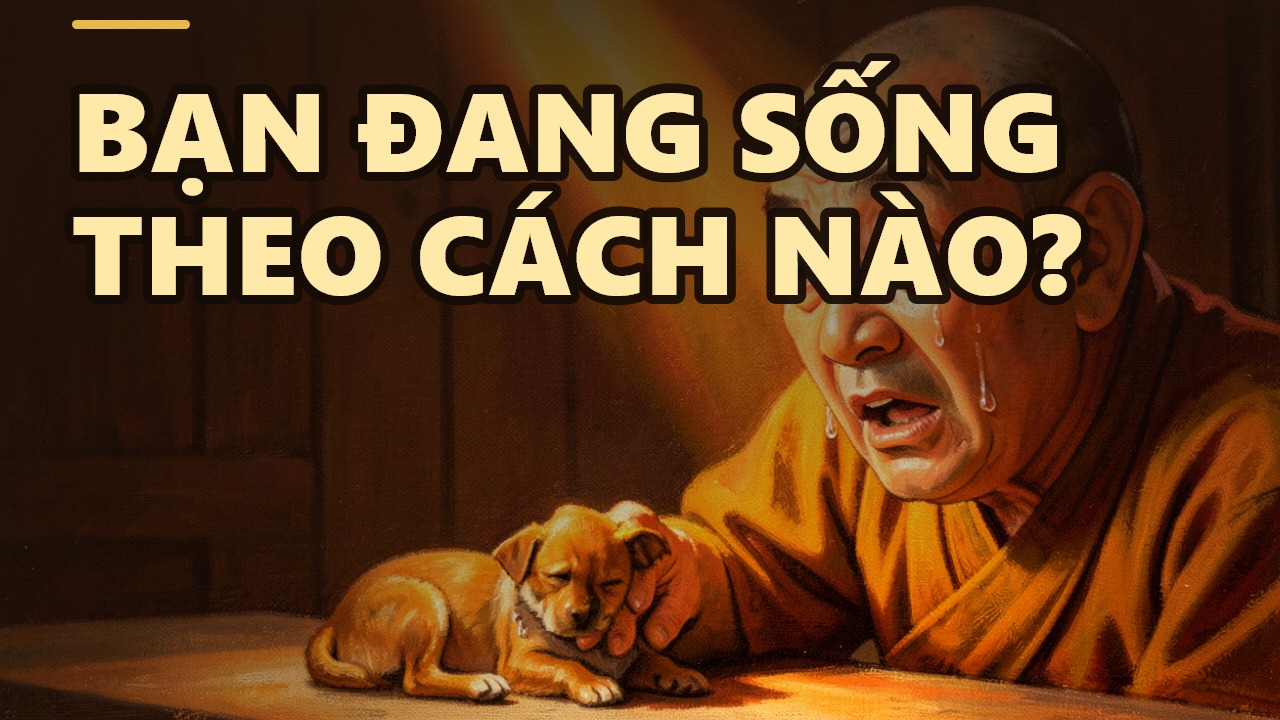
Our actions arise from three sources: instinct, habit, and morality. Understanding this helps us transform our lives and move toward enlightenment. Have you ever wondered why, in a given situation, you act one way rather than another? If you see an injured dog on the roadside, do you walk past or stop to help? When a stranger is in trouble, do you offer assistance or quietly pass by? Every small action carries its own imprint. Today, let us explore the true origins of these behaviors so that we may understand ourselves more deeply.
## Three Sources of All Behavior
Venerable Thich Chan Quang begins his teaching with a simple truth: every thing we do, whether it is an action or a non-action, creates karma. Each behavior stems from one of three sources of the mind. These three sources are natural instinct, habit, and cultivated morality. He states, "All our actions that impact life come from these three sources of the mind. First is natural instinct, second is habit, and third is morality."
Consider the same event viewed through different minds. If you see a suffering dog and walk away, that is the habit of indifference. If you see the dog and immediately think of meat, that is the instinct of greed. If you see the dog and seek to rescue it, that is virtue. Although the event is identical, the behavior differs because the mind differs. This distinction determines the future karmic results.
## Instinct – The Easiest Path
Instincts are tendencies pre-programmed into every sentient being. No one teaches us to fear death, crave pleasure, be selfish, or desire sexual gratification. They arise as naturally as breathing. However, most instincts lead us toward suffering. Venerable Thich Chan Quang notes, "Most instincts are unwholesome. Sentient beings continue to cycle through samsara endlessly because they follow their instinctual urges."
If we surrender to instinct, we become increasingly similar to animals. A child hiding a cake so friends cannot ask for it, or a dog carrying a bone to a hidden corner, displays the instinct of selfishness. A man who sees a beautiful woman and immediately desires to possess her is driven by the instinct of lust. We do not need education or training to access these impulses; they are already within us.
## Habit – The Trap of Repetition
Many behaviors are not driven by immediate instinct but by repetition, which forms habits. A person accustomed to ignoring the suffering of others will remain indifferent regardless of the situation. Someone used to eating dog meat will associate dogs with food upon seeing them. Habits may seem harmless, yet they erode our character, making it difficult for us to recognize how we are deteriorating spiritually.
## Morality – Transforming Instinct
Fortunately, human beings have the capacity for education and spiritual cultivation. In nature, animals follow only instinct, but humans benefit from wise teachers. These teachings, though simple, empower us to rise above our base nature. Venerable Thich Chan Quang shares a story of a mother in Northern Vietnam teaching her child:
"When you eat a piece of cake while your friend stands there watching, what should you do? Before your friend even asks, you must break the cake in half and offer some to them. Give them the larger portion and keep the smaller part for yourself."
The mother did not speak in abstract terms; she provided a concrete scenario. The child remembered this lesson for life and grew up to be generous and noble. This is the power of culture, which enables us to resist selfish instincts. Similarly, through moral education, soldiers overcome the fear of death to protect their homeland. As the teacher explains, "When the country is in danger, they awaken a noble sentiment: love for the land and compassion for fellow citizens. Thus, the soldier takes up arms and charges forward despite the rain of bullets."
Morality does not suppress instinct; rather, it helps us master it. Instead of craving, we learn to value purity. Instead of being selfish, we learn to share. Instead of fearing death, we learn to sacrifice for a greater cause.
## Meditative Concentration – The Key to Wisdom
Among all paths of practice, Venerable Thich Chan Quang particularly emphasizes the role of meditative concentration. Even a monk specializing in Pure Land practice admitted that only meditation grants wisdom and leads to liberation. The teacher affirms, "To become a Buddha, one must cultivate meditative concentration. Those who possess deep meditative concentration will attain Buddhahood."
Through meditative concentration, we observe our own mind, identifying both instincts and habits. From this clarity, we can transform them using morality and wisdom. This path frees us from the endless cycle of karma and guides us toward liberation.
## Begin Today
Each of us stands at the intersection of three currents: instinct, habit, and morality. You do not need to become a saint instantly, but begin by bringing awareness to each small action. When you see an injured dog, pause for a moment to reflect. When you encounter beauty, restrain your mind. When you hold a piece of cake, remember your mother’s teaching. Do not let instinct lead you, and do not let habit bind you. Practice meditation and cultivate your spirit so that you may choose the highest source of your mind. This is the journey back to the Buddha-nature inherently present within you.
AI-assisted translation from the Vietnamese original.
Read in Vietnamese →