
Three Stages Everyone Must Walk Before Entering Meditation
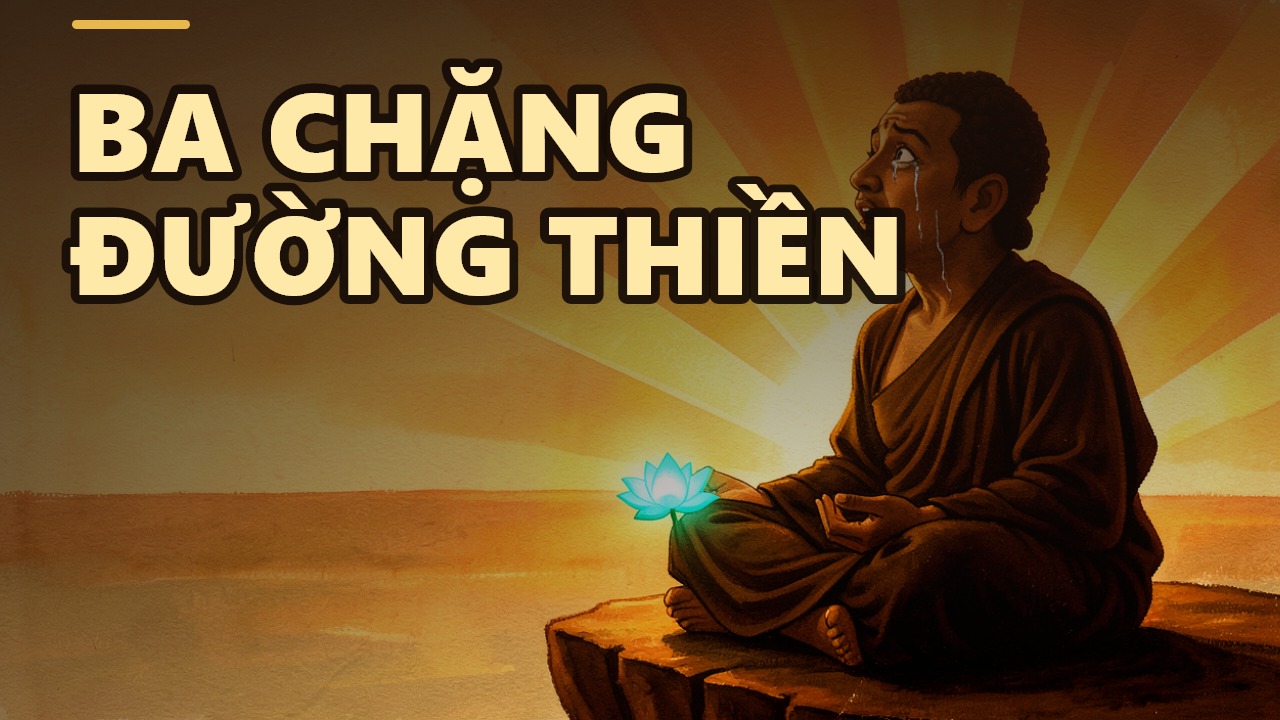
Before you sit in meditation, you must pass through three foundational stages: ethics, merit, and energy cultivation. This is the teaching of Venerable Thich Chan Quang to ensure you have solid luggage for your path of meditation. Have you ever wondered why, despite meditating for so long, your mind remains chaotic? Why do people say meditation is the pinnacle of practice, yet you find this journey endlessly long? Venerable Thich Chan Quang has opened a clear picture of "the paths of meditation." It is not just about sitting; it is about the entire preparation that comes before. Let us listen to understand why meditation is not for those who are in a hurry.
## Why Is Meditation the Core of Buddhism?
At a meditation retreat at Phat Ngoc Xa Loi Pagoda, Venerable Thich Chan Quang began with a startling affirmation. He stated that meditation is not merely an exercise for lay Buddhists, but the primary practice for monks and nuns. Why is this so? Because meditation demands high wisdom and great determination. The Venerable said, "Meditation is the peak of spiritual practice, the core of cultivation. Any day when meditation is promoted is a day when Buddhism is flourishing."
This is why foreigners seeking to understand Buddhism often turn directly to meditation. However, before reaching such heights, one must traverse three fundamental stages.
## The First Stage: Ethics – Seeing Danger in Every Small Fault
Ethics is more than just keeping precepts. While precepts may be summarized in a few hundred rules, the ethics of a noble one is far broader. The Venerable taught that the Buddha condensed all worldly ethics into one small phrase: seeing danger in every minor fault.
A small error, such as leaving one-third of a bowl of rice uneaten, or speaking dismissively about an unknown deity, may seem harmless. Yet, these actions can bring unforeseeable karmic consequences. Therefore, a meditator must begin by gradually correcting small faults in every gesture and word.
## The Second Stage: Merit – An Unquenchable Flame of Service
Merit involves doing good deeds, serving sentient beings, and offering support to the Triple Gem. The Venerable offered a beautiful image: "The vow to serve, contribute, help, and give is like a blazing flame that nothing can extinguish. This is the quality of a Stream-Enterer."
When we are still in the stage of non-realization, we do not yet possess this inner fire. But we must practice cultivating it. This requires time, effort, and resources. Each person gives according to their ability, but the crucial point is never to refuse a small opportunity to make merit. Whether it is picking up a piece of trash, inviting someone to meditate, or encouraging a discouraged friend, these acts build the foundation.
## The Third Stage: Energy Cultivation – Health Is Also a Form of Ethics
Few realize that physical training is directly related to meditation practice. The Venerable pointed out, "Why must we practice energy cultivation? Because maintaining health is also an ethical duty."
A healthy person can care for others and contribute to society. A weak person becomes a burden to others and accumulates debt of merit. Thus, before attaining enlightenment, you need a strong and stable body so that the physical form and the spirit can advance together.
## Warning: Do Not Let Intellectual Understanding Deceive You
On the path of meditation, a grave danger is "unintentional pride" – believing oneself to have attained high levels while remaining at a low stage. The Venerable warned, "Intellectual understanding always runs ahead of our actual realization."
It is like a barber discussing presidential matters as if he were ruling the world. In meditation, if you claim attainment without true realization, or mistakenly believe you have reached a high stage, you risk falling into the error of exaggerated self-view, which carries heavy karmic results. Therefore, always question yourself and seek verification from a qualified teacher.
## What the Buddha Taught: Body and Mind Are One
An interesting point emphasized by the Venerable is that in the original sutras, the Buddha described the stages of meditation through the states of the body, not just the mind. He stated, "The Buddha expressed the states of realization in various levels of meditation through the condition of the body."
This surprises many, because later commentators often preferred to speak of the vast and subtle nature of the mind. But the Buddha was wiser than the patriarchs. He wanted us to avoid dreaming and remain practical, for body and mind cannot be separated. When the body becomes peaceful, the mind follows suit.
Thus, the path of meditation is not simply stepping through a door. It is a long journey requiring a solid foundation: ethics, merit, and energy cultivation. Begin today with seemingly small things: finish your meal, pick up a piece of trash, practice an energy cultivation exercise. Step by step, you will not only go deeper into meditation but also draw closer to true peace.
The road is long, but you do not walk alone. May the Buddha bless you as you proceed with mindfulness.
AI-assisted translation from the Vietnamese original.
Read in Vietnamese →