
Three Essential Questions: When Do We Truly Begin to Practice?
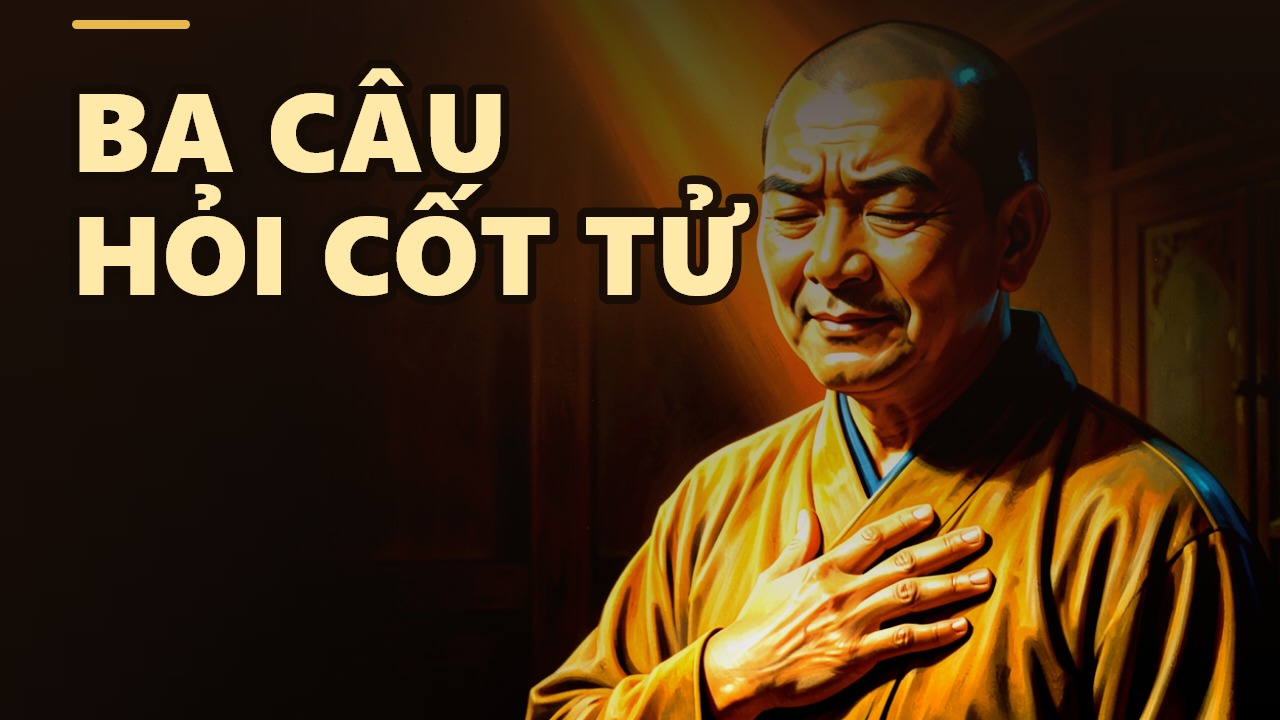
Have you ever wondered to yourself, "Have I been practicing the right way?" Some people may visit the temple every day, chant scriptures, and make offerings, yet still feel a lack of peace within. Others may never have been to a temple, yet they know how to look inward. In a recent dharma talk, Thầy Thích Chân Quang offered three essential questions for each person to verify their own path of practice.
**Three Essential Questions**
Thầy Thích Chân Quang said: "Please memorize these three questions for me so you can share them with fellow Buddhists and spiritual friends." The three questions are: First, when can one be said to have truly started practicing? Second, when can one be said to have enough of a spiritual resolve? Third, when does one truly begin to walk the genuine spiritual path? The answers may seem simple, but they contain an entire journey.
**The First Question: When Do We Start to Practice?**
Many people think that visiting temples, chanting, and reciting the Buddha's name is practice. But Thầy Chân Quang affirms: "The answer is when you begin to see your own faults." He shared a story about a woman after her divorce who simply said, "It's because I was too inferior to keep my husband." This statement placed no blame on others; she only accepted responsibility herself. He observed that people usually blame others. Few accept fault for themselves. Whereas a truly practicing person, even when the faults lie elsewhere, still strives to find their own error somewhere.
"What defines someone who has started to practice? When do they begin to see their own faults? That is the answer."
Seeing one's own faults requires three qualities: wisdom to recognize them, courage to accept them, and humility to lower oneself. If we do not see our own faults, even if we chant hundreds of scriptures or recite the Buddha's name ten thousand times, we have not truly entered the gateway of the path. Practice is self-reflection, seeing our mistakes, and correcting them.
**The Second Question: When Do We Have Enough Spiritual Resolve?**
Regarding whether one's spiritual resolve is sufficient, Thầy Chân Quang points to a specific sign: "When the thought of wanting to ordain arises in your mind." It is not necessary to ordain immediately, but the heart must nurture that ideal. He said, "Because sooner or later, everyone must practice; no one can wander forever in the cycle of rebirth. The monastery is the true shore, the true home, and the place of true love."
"When can one be said to have enough spiritual resolve? When the thought of wanting to ordain arises."
Many people fear the idea of ordination, thinking they must give up their hair, clothes, and worldly pleasures. But precisely when the spiritual resolve is sufficient, one actually finds joy within discipline. Thầy shared a story about secretly watching a martial arts performance and being exposed on television, to illustrate that a practitioner must self-limit. But it is through such limits that true freedom is found.
**The Third Question: When Do We Walk the Spiritual Path?**
This is the most difficult question. Thầy said: "When you attain the mindfulness and clear awareness of meditative concentration. Your mind becomes empty, lucid, and pure, and you begin to maintain mindfulness and clear awareness whether walking, standing, sitting, or lying down." However, this state is ineffable; only those who experience it know.
"When does one truly begin to walk the spiritual path? When they attain the mindfulness and clear awareness."
This mindfulness and clear awareness is a state of mind that is spacious, alert, and pure amidst the flow of life. We listen to understand, but we must practice to truly attain it. This is the goal toward which practitioners strive.
**Practicing the Three Questions in Daily Life**
These three questions are not meant to intimidate, but to serve as a mirror for self-reflection. Thầy Chân Quang also advises: "Practice in such a way that you continually see your own faults. See them, transcend them, see them and transcend them, and naturally, you will become a teacher upon whom beings can rely." When we learn to accept our faults, we cease causing disturbances, stop blaming others, and become gentle and humble. This is the foundation of all practice.
To help guide others, Thầy also teaches how to bring the monastery to the people: "First, we must create a 'mobile temple,' meaning we bring the temple to each household. When people understand, they will return to the permanent monastery." Similarly, we need to actively reach out to everyone, sharing the teachings from our own past mistakes, to build faith and create common benefit.
**Conclusion: Look Within**
These three questions, though seemingly simple, are a guiding compass for the practice journey. Let us look within ourselves each day, see our faults and correct them, nurture the aspiration for ordination in our hearts, and gradually step into mindfulness and clear awareness. Do not hastily seek lofty things outside. The spiritual path begins right within the heart and mind of each of us.
May all practitioners be diligent on the path!
AI-assisted translation from the Vietnamese original.
Read in Vietnamese →