
Three Vital Questions: Have You Truly Begun to Practice?
Thầy Chân Quang poses three vital questions: when do we begin to practice, when is our spiritual resolve complete, and when do we truly step onto the spiritual path. The answers lie in seeing our own faults, the aspiration to leave home life, and mindful awareness.
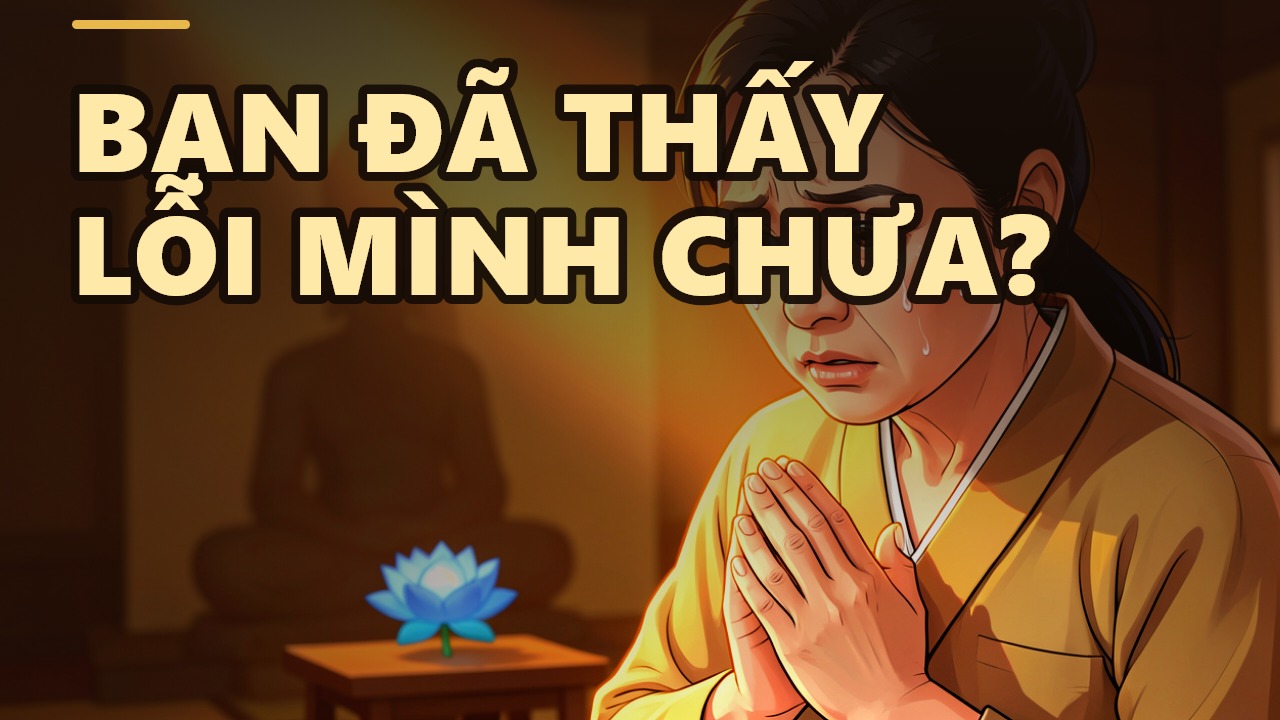
There was a woman who, after her divorce, was asked why it happened. She did not blame her husband, nor did she complain about anyone. She simply said gently: "It was because I was lacking; I could not keep my husband." It sounds like an ordinary story, but in a dharma talk by Thầy Thích Chân Quang, this is precisely the sign of someone who has begun to practice.
We often think that practicing means going to the temple, chanting sutras, and reciting the Buddha's name. But Thầy Chân Quang points out that these outward forms are not yet true practice. He poses three vital questions to illuminate each person's spiritual path.
1. When does one begin to practice?
Thầy Chân Quang asks: "What kind of person has begun to practice?" His answer is very brief: "When one begins to see one's own faults." Bowing to the Buddha, reciting the Buddha's name, chanting sutras, sitting in meditation — if we have not yet seen our own faults, we have not yet truly begun to practice. He states clearly:
"If you do not know your faults, then even if you chant one hundred Lotus Sutras, or one thousand Lotus Sutras, it still cannot be called practicing."
Why is this so? Because seeing our own faults requires three qualities: the wisdom to recognize our mistakes, the courage to admit them, and the humility to lower ourselves. Without these three virtues, we will always defend ourselves, cover up our wrongdoings, and blame others. As Thầy says, one who refuses to acknowledge their faults will cause trouble wherever they go.
2. Wisdom, courage, and humility
In daily life, we easily see when others are wrong, but rarely see our own faults. Thầy tells of a divorced woman who did not blame her husband but said: "It was because I was lacking." That is a person of courage, humility, and wisdom. Yet so many people, after a relationship falls apart, only know how to blame the other person. When we learn to take responsibility for our faults, even a small part of them, we have begun to enter the gate of the Buddha.
Thầy also shares his own experience: when he first learned the Dharma, he looked back and saw that he had so many faults. His mother saw no fault in her son at all, but Thầy examined his own mind and heart. The more faults he saw, the more he came to understand, and those very faults became teachings for sentient beings.
3. Is our spiritual resolve complete?
The second question: when can we be said to have complete spiritual resolve? Thầy answers: when the aspiration to leave home life arises in us. We need not ordain immediately, but that longing must be present in our heart. One whose spiritual resolve is complete will see the temple as a shore of refuge, a loving home, while the worldly house is full of burdens and suffering.
"When do we begin to have complete spiritual resolve? When the aspiration to leave home life arises in us."
If we cannot ordain in this lifetime, do not be sad. Simply cherish that ideal, and when the conditions (dependent origination) ripen in a future life, it will come to be. One who has never given rise to the aspiration to leave home still has a tender and unsteady spiritual resolve.
4. Stepping onto the spiritual path
The third question: when do we truly begin to walk the spiritual path? It is when we attain mindful awareness. This state cannot be put into words, for it belongs to the realm of meditative concentration, beyond language and thought. But Thầy describes it as the moment when the mind is empty, clear, pure, and awake in everything — walking, standing, lying down, and sitting.
"Once you reach that mindful awareness, it becomes a different realm of the mind. So it cannot be described. One can only say it is a state that is always empty and clear, awake and pure."
That is the goal of practice. To attain it, we need to train in meditative concentration and maintain mindfulness in our daily lives.
5. Our faults can become teachings
Here is the wondrous thing Thầy Chân Quang shares: it is precisely because he saw his own faults that his teachings carry power. He says that his best dharma talks actually come from his own faults, from his remorse and his tears. By recognizing his faults and moving beyond them, he is able to teach sentient beings. So do not fear your mistakes. Learn to look back and transform them.
It is the same for lay practitioners. When sharing the Dharma, if we have gone through the experience of seeing our own faults, our words will be gentle, humble, and deeply moving. But one who merely talks without seeing their own faults may speak impressively, yet their words are hollow — and they can even cause harm.
Conclusion
These three vital questions are a mirror reflecting our own mind and heart. Have you truly begun to practice? Look back at yourself each day. When you are tempted to blame others, pause and look for your own faults. Each time we acknowledge a fault, the heart grows lighter, and we take one step closer to the true path. The temple is not far away — it lies right within a heart that knows how to love and how to correct itself.
It is never too late to begin. Start today, with one honest look within.
AI-assisted translation from the Vietnamese original.
Read in Vietnamese →