
Three Levels of Knowing: When the Noble Ones Transcend the Aggregate of Consciousness
What is the aggregate of consciousness? Why can intuition be misleading? And when one attains non-self (anatta), how does the knowing of a noble one transcend all concepts? This article helps you understand the three types of knowing in the mind and the difference between ordinary supernatural powers and the absolute resonance of an Arahant.
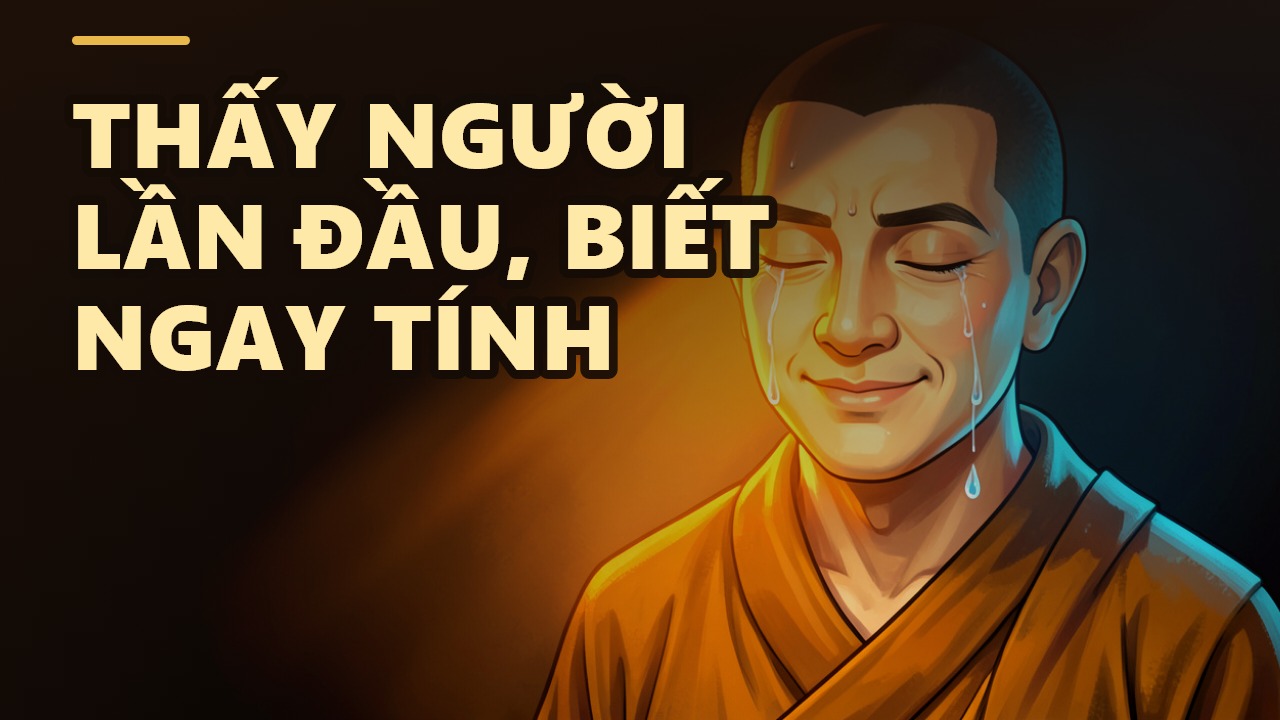
Have you ever met someone for the first time, yet within a single second, felt that they were trustworthy or should be avoided? That is intuition, one of the three levels of knowing within the aggregate of consciousness. But is intuition always correct? And when a noble one no longer uses the aggregate of consciousness, how do they know everything? Let us explore this through the teachings of Venerable Thich Chan Quang.
## 1. What Is the Aggregate of Consciousness? The Three Types of Knowing
The aggregate of consciousness is the knowing nature of the mind. All feelings, thoughts, and perceptions belong to it. Yet this knowing has three levels, ranging from the surface to the deepest essence. As taught, "The aggregate of consciousness is knowing. It is the knowing of the mind. The structure of the mind is knowing. Wherever there is knowing, there is the aggregate of consciousness."
These three levels are specific knowing, abstract knowing, and intuitive knowing. Specific knowing means recognizing exactly what is seen or heard. For example, seeing someone meditating and knowing they are sitting. It also includes knowing your own inner state, such as recognizing anger, sadness, or love. Abstract knowing involves synthesizing many specific observations to infer a conclusion. For instance, observing how a couple speaks, their eye contact, and how their children behave, then concluding that the family is happy.
Intuitive knowing occurs instantly, without needing data or logical deduction. For example, upon entering a house before meeting anyone, you immediately sense a warm and happy atmosphere. We all use these three types of knowing daily. However, sensitive people often rely more on intuition. While intuition can be very accurate, it can also lead to error.
## 2. Intuition: A Double-Edged Sword
Intuition is a gift, but it can lead us astray if we lack mindfulness. When meeting someone new, we form an initial impression within just one-tenth of a second. However, with prolonged contact, we may become blinded by smiles, words, and external appearances.
Venerable Thich Chan Quang explains that in that first tenth of a second, intuition reveals the truth about a person immediately. But later, when we are covered by their charm or speech, we fall into error. The initial flash of insight is usually very accurate. Therefore, listen to the first voice of your mind, but also use wisdom to verify it. Do not let outward glamour deceive the inner light.
## 3. When Noble Ones Transcend the Aggregate of Consciousness: Absolute Resonance
When one attains non-self (anatta) and eliminates the ego, all aggregates, including the aggregate of consciousness, are transcended. Noble ones no longer rely on intuition or logical inference. Instead, they utilize a capability called resonance. Resonance is not knowing about an object; it is becoming the object itself.
As stated, "Resonance means that when a noble one wishes to know something through resonance, they direct their mind toward it. They become that thing." For example, to know about a person, an Arahant does not look or guess. They become that person. They perceive every tiny flaw in that person’s soul and even their countless past lives. No detail can remain hidden.
This is why an Arahant knows themselves better than they know themselves. They clearly see the entire chain of karma across many lifetimes. They also see the future because they fully understand cause and effect (karmic law).
## 4. Attaining Meditation Versus Attaining Sainthood: A Dangerous Wrong View
Many mistakenly believe that achieving deep meditative concentration guarantees sainthood. However, the Buddha clearly taught that attaining meditation and attaining sainthood are two different paths. Only Arahants possess the complete three knowledges and six supernatural powers. Later meditation masters, despite having high spiritual attainments, have never achieved the fullness found during the Buddha's time.
The Buddha explicitly distinguished between these two states, a teaching only He could articulate. Some masters, like Xiangyan Zhixian, had profound insights into Zen. Yet, when questioned about ultimate truth by Guishan Lingyou, he had to awaken himself through the sound of a stone hitting bamboo. Others, like Yangshan, distinguished between Tathagata Zen and Patriarchal Zen. In reality, claiming Patriarchal Zen is superior to Tathagata Zen is a grave error that leads many to disrespect the Buddha's words.
Venerable Thich Chan Quang emphasizes that this disrespect causes Buddhism to decline from within. To revive it, we must return to absolute reverence for the Buddha.
## 5. Reverence for the Buddha: The Foundation for Reviving Buddhism
The Buddha is the supreme teacher whom no one can surpass. This faith is the root of all practice. If we lose reverence, we risk being misled by later teachings that may seem eloquent but deviate from the Buddha's true intent. One must believe that no one is greater than the Buddha. Without sufficient reverence, no one can truly practice.
Nurture reverence for the Buddha in every moment. This is not merely a rule but the energy that guides us toward the light of liberation. When we honor the Buddha, we recognize our path and avoid getting lost in superficial attractions. Devas love and praise those who hold the Buddha in high regard. At death, such practitioners go to the realm of the wise and holy.
Begin today by keeping your mind pure, distinguishing the three levels of knowing in the aggregate of consciousness, and placing your trust in the Buddha as your compass. This is how you contribute to the revival of Buddhism within your own heart.
AI-assisted translation from the Vietnamese original.
Read in Vietnamese →