
The Shared Moonlight: A Lesson on the Common and the Personal on Mid-Autumn Night
Through the image of shared moonlight, Venerable Thích Chân Quang teaches us about the connection between all people, and reminds us to return to universal truths so that we may live in peace and love.
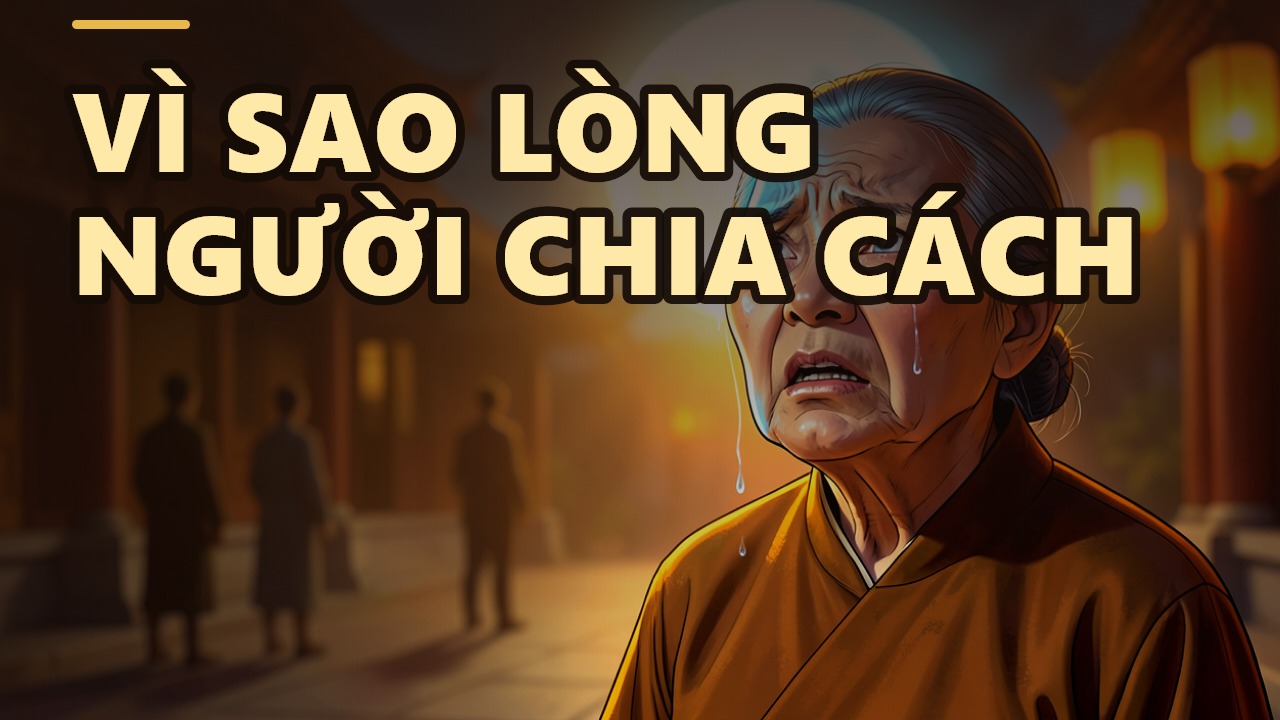
On Mid-Autumn night, when everyone gathers beneath the temple roof and the bright moon shines across the sky, we suddenly realize something simple yet profound: joy does not need to be grand. It is enough to see one another, to share with one another. Yet that moonlight also raises a larger question: why do human beings remain divided and full of hatred, when all of us share the same moonlight?
Joy in the Small Things
In today's busy life, we easily forget that happiness does not lie in great things. Venerable Thích Chân Quang reminds us: "People learn to find joy in the smallest things, rather than waiting to win the lottery before they can be happy." A green leaf budding on a branch, an elderly person quietly arriving at the temple, a nod of greeting on the street — all of these are the beauty of life, if only we open our hearts. When our mind/heart has less craving and less attachment, joy naturally fills every moment.
The Moonlight — A Symbol of What Is Shared
Since ancient times, moonlight has entered poetry, painting, and the love between two people. Each person who looks at the moon pours into it their own private feelings, yet the moon belongs to everyone, to no one in particular. The Venerable teaches: "The moonlight is shared by all; it belongs to no one. Yet each person looks at that shared moonlight and expresses their own private longings."
This reminds us that although each of us has our own life, we all share one humanity, one earth, and one longing for love.
The Common and the Personal in Daily Life
And yet, people tend to turn what is shared into what is personal. Money in our own pocket is private, but money in someone else's pocket is common — a way of thinking full of selfishness. The Venerable points out: "The more something belongs to everyone, the more it is neglected." When there is a pothole in the road in front of someone's house, people walk around it and curse, but few are willing to fill it in. They think it is everyone's business, and therefore no one's. But if everyone cared for the common good, how much better this life would be.
A Lesson on Non-Self (Anatta)
The Buddha taught about non-self (anatta) and the non-ownership of self — that there is no "I" and nothing that is "mine." To live in this way is to be close to enlightenment. The Venerable shares: "If someone sees only what is personal and private, I know their virtue is very low. But if someone sees everything as shared, this person has great roots of goodness and is very close to enlightenment."
Even the things we currently own — if we see them as belonging to all, to be used in service of everyone — then our mind/heart will be far lighter and more peaceful.
Seeking a Universal Truth for Humanity
The Venerable emphasizes that human beings need to find a shared truth, a universal teaching, so that there will be no more division, hatred, or war. "People hate one another and wage war only because they cling privately to their own views on how to live, refusing to be alike." If we can find that shared truth, humanity will join hands and live in peace and happiness, devoting time to nobler pursuits such as spiritual practice and the exploration of the universe.
Closing Words
On this Mid-Autumn night, look up at the moonlight and remember that we are all children of the Buddha, sharing one home called humanity. Let us begin with small things: caring for the common good, living for others, and returning to the teaching of love. As the Venerable reminds us: "We are the ones who have resolved to seek a universal truth for humanity." May each of us become a small moon, shining brightly and connecting love throughout this world.
AI-assisted translation from the Vietnamese original.
Read in Vietnamese →