
Who Orchestrates Our Destiny? Insights from the Buddha's Teachings
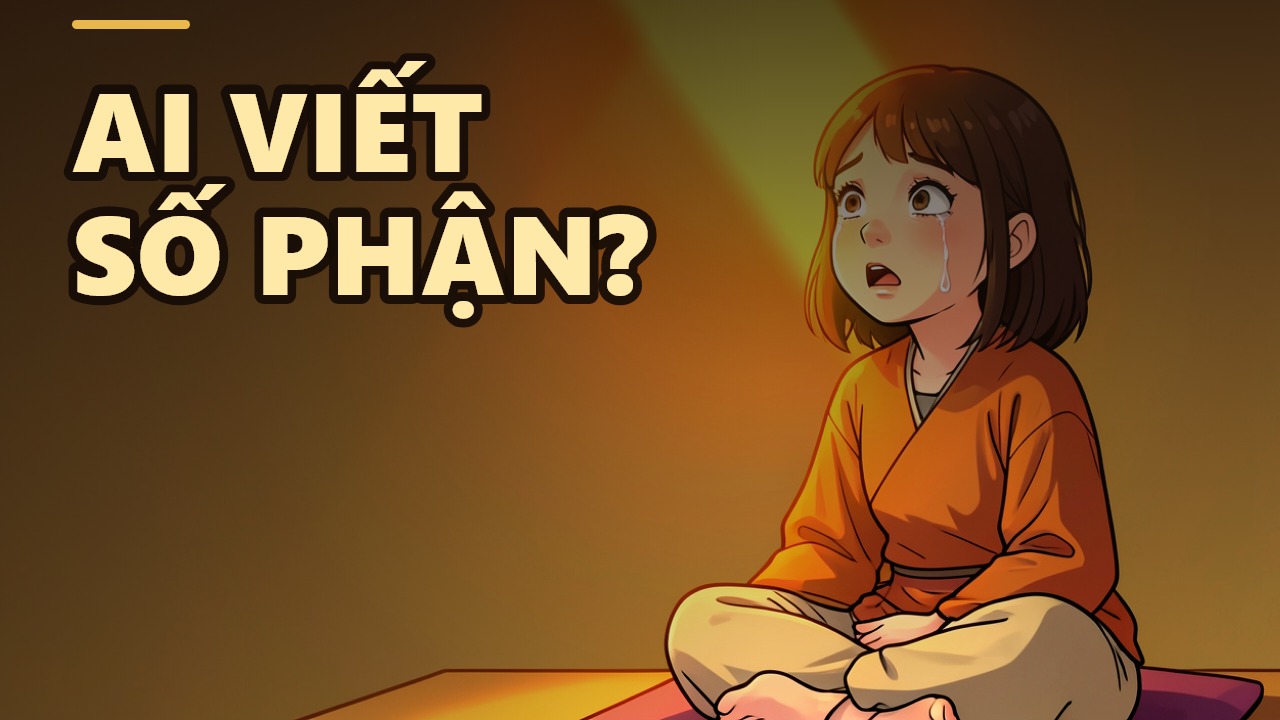
Have you ever felt as though you had foreseen an event before it unfolded? Consider a friend who repeatedly spoke of death and entrusted documents to others just before suffering a fatal traffic accident. Or think of a devout Buddhist woman who dreamed of her own coffin, only to be struck by a vehicle two weeks later. These stories lead us to wonder: Is our life already predestined? And if so, who holds the pen that writes our fate?
From ancient times, humanity has sought to glimpse the future through palm reading, face analysis, card divination, or casting I Ching hexagrams. All these practices stem from a desire to uncover what seems already arranged. Even at his birth, the Buddha was prophesied to become an enlightened being. But how can such predictions come true? If the future shifts constantly based on our choices, how can it be foretold? This suggests that some form of destiny may indeed be laid out for us.
As Venerable Thich Chan Quang asks, "Does this mean our lives have a predetermined fate, already arranged? It is because it is arranged that we can divine it."
From a physical perspective, many factors shape our destiny. Parents give us life and nurture us; governments create our social environment; society influences us through education, the internet, and games; and nature affects us deeply through favorable weather or disasters like droughts and floods. Yet, these external elements do not fully explain why some people possess intuitive foresight about their own futures.
Spiritual traditions often present two views: one attributes destiny to divine beings, while the other points to cause and effect (karmic law). In truth, both are correct, differing only in scope. Just as an employee’s promotion might be credited to the chairman’s decision, it ultimately rests on the individual’s merit and ability. In Buddhism, celestial kings may influence human fate, but they operate strictly within the framework of cause and effect (karmic law).
Venerable Thich Chan Quang clarifies, "Both are right, but one is a near truth and the other a far truth; both are valid."
Ancient beliefs viewed Heaven as a sacred presence where sky, earth, and humanity each fulfilled their roles harmoniously. People worked diligently and prayed when stuck. However, some religions later attributed excessive intervention to Heaven, causing humans to lose their willpower. Consider the story of a man stranded in the desert who collapsed, believing Heaven had decreed his death. His companion awakened him by asking, "Do you still have your own will? Do you want to live?" He rose and survived. Heaven said nothing; we merely projected our fears onto it.
As the teacher notes, "People assign intentions to Heaven and imagine those are Heaven’s words, yet Heaven speaks no word."
If destiny is arranged, can it be changed? The answer is yes. Behind every arrangement lies the law of cause and effect (karmic law). By sowing good seeds, we reap good fruits. Live virtuously, cultivate blessings from merit, and refine your mind/heart. When you transform your thoughts and actions, you rewrite your own destiny. Do not blame Heaven or surrender to fate. Instead, take ownership of your life with faith in cause and effect (karmic law) and relentless effort.
AI-assisted translation from the Vietnamese original.
Read in Vietnamese →