
Who Eats, Who Is Full; Who Practices, Who Realizes: The Buddha's Teaching on the Solitude of Karma
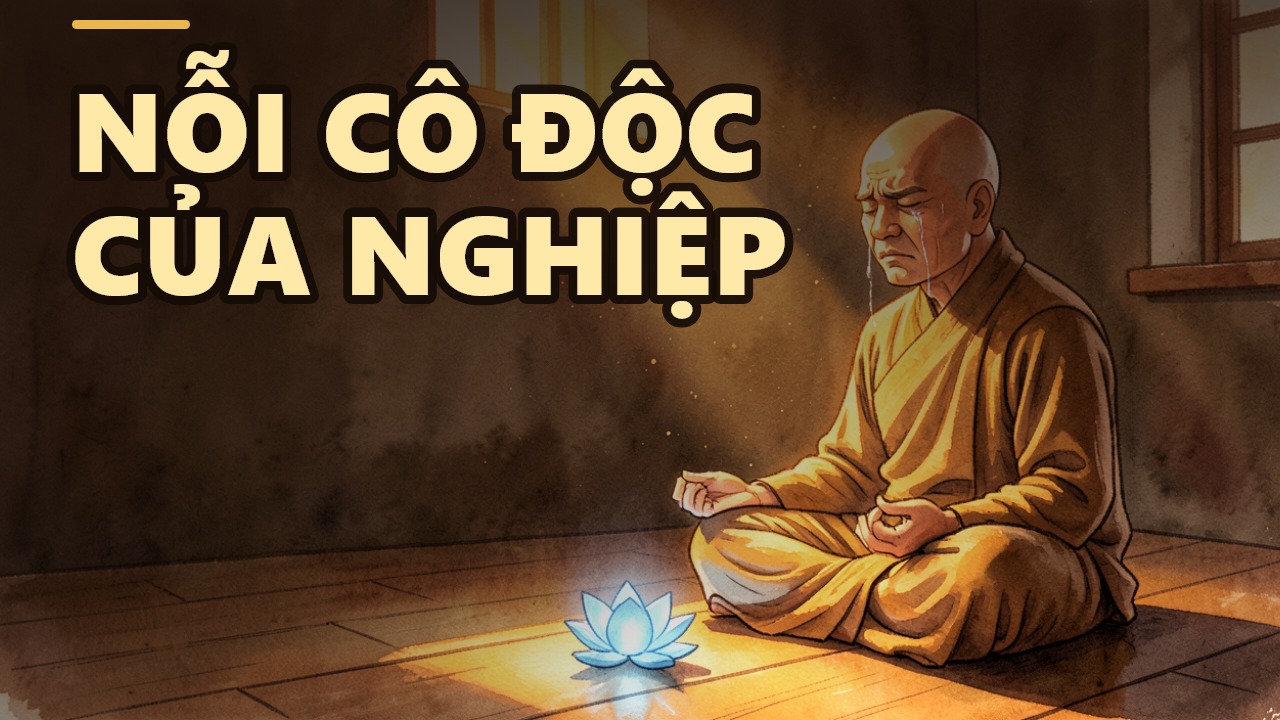
We often hear the saying, "Who eats is full; who practices realizes," but have we ever truly understood its profound meaning? Amidst a busy life filled with teachings on love and sharing, this phrase seems contradictory, like a reminder of the solitude inherent in each human existence. Today, let us listen to the explanation by Venerable Thich Chan Quang to see that behind this simple saying lies a great truth about karma and the freedom of every sentient being.
### Going Against the Teaching of Altruism
When we first enter the path, the first lesson we receive is to live for others, to support one another, and to help each other. Yet, amidst the flow of life, we hear the echo: "Who eats is full; who practices realizes." At first glance, it feels like a rejection of altruism, an encouragement of selfishness. In reality, however, it is a universal law that we must deeply understand.
In life, there are things we can do for one another, but there are also things that absolutely no one can do for us. As the teacher explains: "There are tasks we can assist each other with, but there are others each person must undertake themselves. We must understand these two realities in life."
### No One Can Eat for You to Be Full
It is an obvious truth: no one can eat on your behalf to make you full. No matter how much love exists, you cannot eat for your parents or siblings. Each person eats and becomes full on their own. From eating and sleeping to studying and practicing, everything is our own responsibility. The teacher recounts a story of a Zen master who attained enlightenment upon hearing: "You must eat to be full; you must sleep; and you must go to the toilet yourself—I cannot do it for you." At that moment, his disciple awakened, realizing that enlightenment cannot be borrowed from others; it must be cultivated through one’s own practice.
### Studying for Others Does Not Make Them Wise
The same applies to learning. You might hire someone to study for you or obtain a degree on your behalf, but knowledge cannot be transferred. A person with a diploma but without true understanding will fail in their work. Conversely, someone who studied independently may lack credentials but possess real talent, leading to success. The teacher emphasizes: "Whoever studies becomes wise; one person’s study does not make another wise."
### Illness and Death: The Ultimate Solitude
There are physical pains we cannot share. When a loved one is ill, we can care for them, but we cannot suffer the illness for them. When they pass away, we cannot die in their place. These moments reveal the solitude of human existence. Yet, within this solitude, we find deep empathy: everyone must face birth, aging, illness, and death alone.
"Illness is borne alone; death is faced alone. No one follows you into that final journey."
### Spiritual Practice: A Path Walked Alone
Especially in spiritual practice, no one can practice for you. A chanting machine may recite the Buddha’s name day and night, but it cannot achieve rebirth in the Pure Land because it lacks a mind/heart. Humans must chant the Buddha’s name themselves, practice themselves, and transform their own minds. The teacher teaches: "Only through arduous personal practice can one attain realization and liberation; no one can practice on your behalf."
### Between Altruism and Self-Reliance
Therefore, we must understand that living altruistically does not deny self-reliance. On the contrary, the spirit of altruism helps us create merit, but that merit belongs solely to each individual; it cannot be given away. Some people are wealthy due to blessings from merit, while others suffer poverty due to a lack of merit. The wealthy can help the poor materially, but they cannot give them the merit needed for prosperity. Merit is the result of one’s own actions, thoughts, and words in the past and present.
"That invisible merit belongs to each person individually; no one can steal it from another."
### Conclusion: Light Your Own Torch and Walk
The Buddha taught: "Be islands unto yourselves, take refuge in yourselves." This teaching does not contradict altruism but complements it. Let us live with love and help others, but remember that on the path of practice, each person must walk alone. Do not rely on others, teachers, or temples. Strive diligently, transform yourself, and seek enlightenment on your own. As the teacher reminds us: "Who eats is full; who practices realizes." Begin today, in this very moment. Light the torch of wisdom and walk the path toward nirvana.
AI-assisted translation from the Vietnamese original.
Read in Vietnamese →