
Three Thousand Dignified Manners, Eighty Thousand Subtle Practices: Why Do Small Gestures Reflect the Soul?
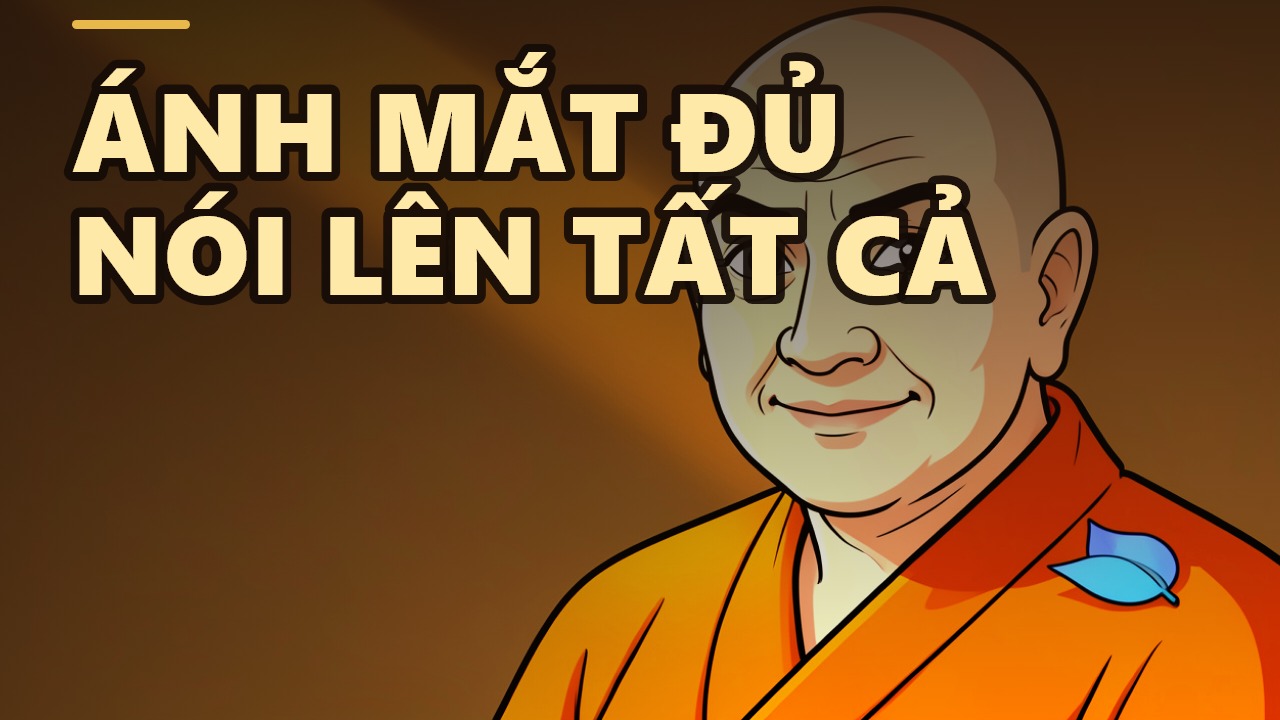
When you meet an old friend after a long time, you notice their gentle walking, soft speech, and friendly gaze. You feel a sudden shyness because your own movements are hurried and noisy. What creates this difference? In his dharma talk on Moral Psychology, Venerable Thich Chan Quang reveals the secret: it is all the result of a pure inner mind and subtle self-control.
Many people ask me how to know if a practitioner’s mind is truly pure. I say it is easy. We do not need supernatural powers or divine insight. Just watch how they walk, and you will understand immediately.
### Three Thousand Dignified Manners: Beauty Radiating from the Mind
Dignified manners are not about posing for appearance. Venerable Chan Quang explains that "Oai" refers to majestic virtue, while "Nghi" refers to demeanor. External gestures only become beautiful when they are nourished by wisdom and meditative concentration. A person with a pure mind looks like a painting, even when sitting under a simple tree.
Even the way such a person walks toward a shrine is beautiful.
### Subtle Dignified Manners: Controlling Every Glance and Smile
It is not just about walking; every glance, smile, and tone of voice constitutes subtle dignified manners. The teacher says that our eyes emit energy. Therefore, when speaking, we should only look briefly before shifting our gaze elsewhere. Staring fixedly can make others uncomfortable. Smiling also requires moderation. Sometimes we raise the corner of our mouth, sometimes we smile without showing teeth, and sometimes we laugh softly a few times.
A person who possesses mindfulness and control adjusts their voice to be moderate, pleasant to hear, and filled with tranquility.
### Eighty Thousand Subtle Practices: Morality in Small Details
If dignified manners are external, subtle practices are internal. These are profound moralities found in the smallest details. Unlike mere polite behavior, which is often superficial culture, subtle practices stem from genuine love and respect for others. The teacher distinguishes them clearly: Politeness belongs to social etiquette, but we do not know if there is true morality inside. Only when there is inner morality do we call it a subtle practice.
### Transforming Culture into Morality
People in many countries have polite cultures, but this does not guarantee compassion. The teacher tells a story of a friend saying "You're welcome" while feeling otherwise inside. In Vietnam, northerners often invite guests to eat, even if the rice pot is empty. That is culture, not yet a subtle practice. To transform it into a subtle practice, one simply needs sincere love and respect for human beings.
To turn polite behavior into a subtle practice, all it takes is a heart of sincere love and respect for others. Love and respect instantly transform politeness into a subtle practice.
### Practice: Starting from the Mind
Do not rush to imitate three thousand dignified manners, as this may lead to awkwardness. The teacher reminds us: If you worry too much about these manners, trying to act delicate and feminine, you will suffer. Instead, focus on controlling your mind. When the mind is at peace, the body naturally becomes graceful. For beginners, try to behave politely in daily life, and gradually nurture compassion.
The dharma talk concludes as a beginning. The eighty thousand subtle practices are not meant to be counted for completeness, but to help us see the greatness of the saints and use it as equipment for many lifetimes of cultivation. Today, start with a compassionate glance, a light smile, and a warm word. All eighty thousand paths begin with one step of stillness.
AI-assisted translation from the Vietnamese original.
Read in Vietnamese →